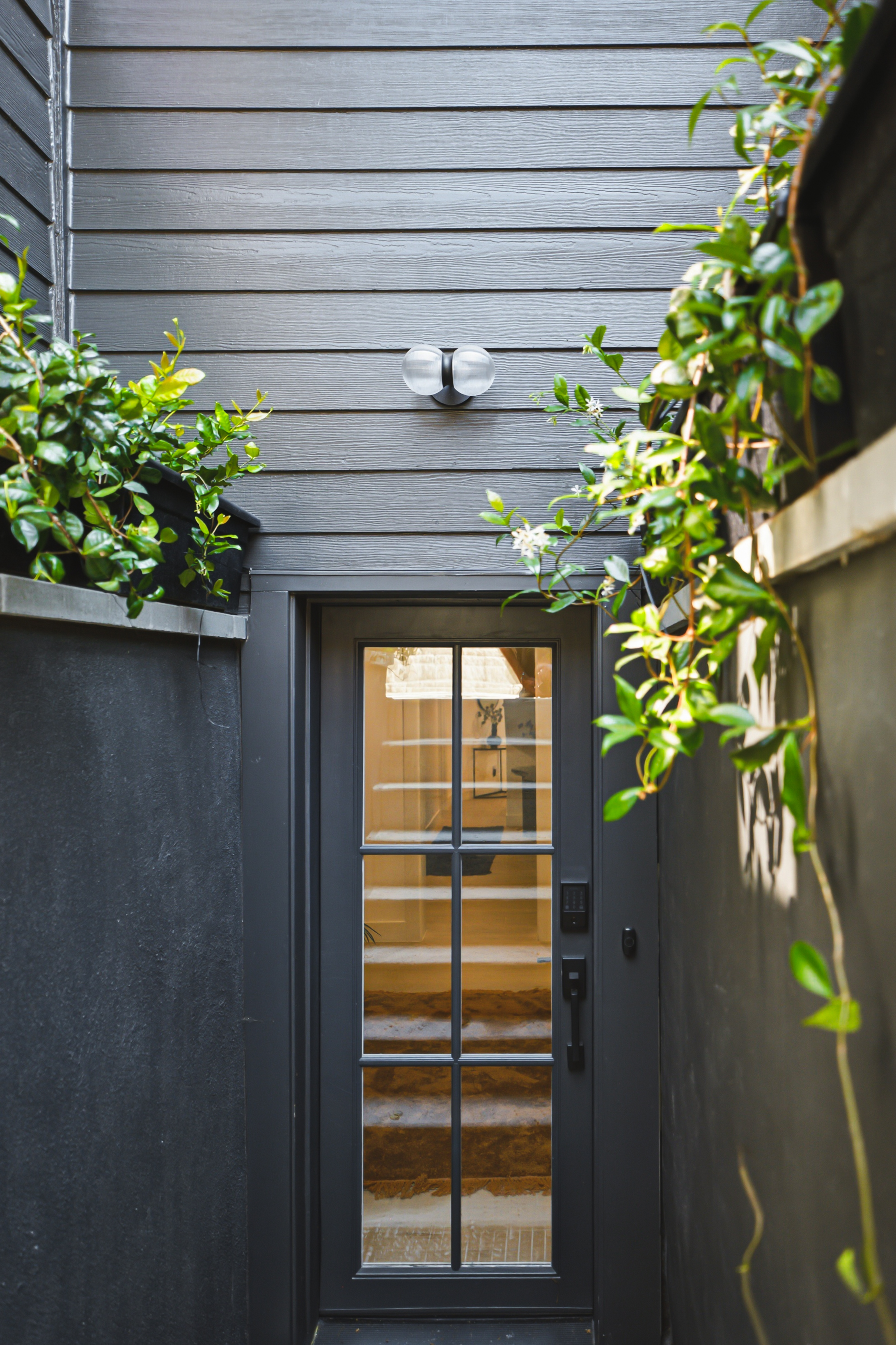
The plants
The beds were planted through the summer of 2025, into a garden a great deal older than that. Here is what you will actually be looking at.
Star jasmine
The one you will smell. Trachelospermum jasminoides, climbing at both entrances and up through the cedar screens, so you walk under it coming and going. Evergreen, so the dark glossy leaves hold all winter. White pinwheel flowers open around late May and carry for a few weeks after, strongest once it is dark. If you are here then, leave a window open at night.
The courtyard
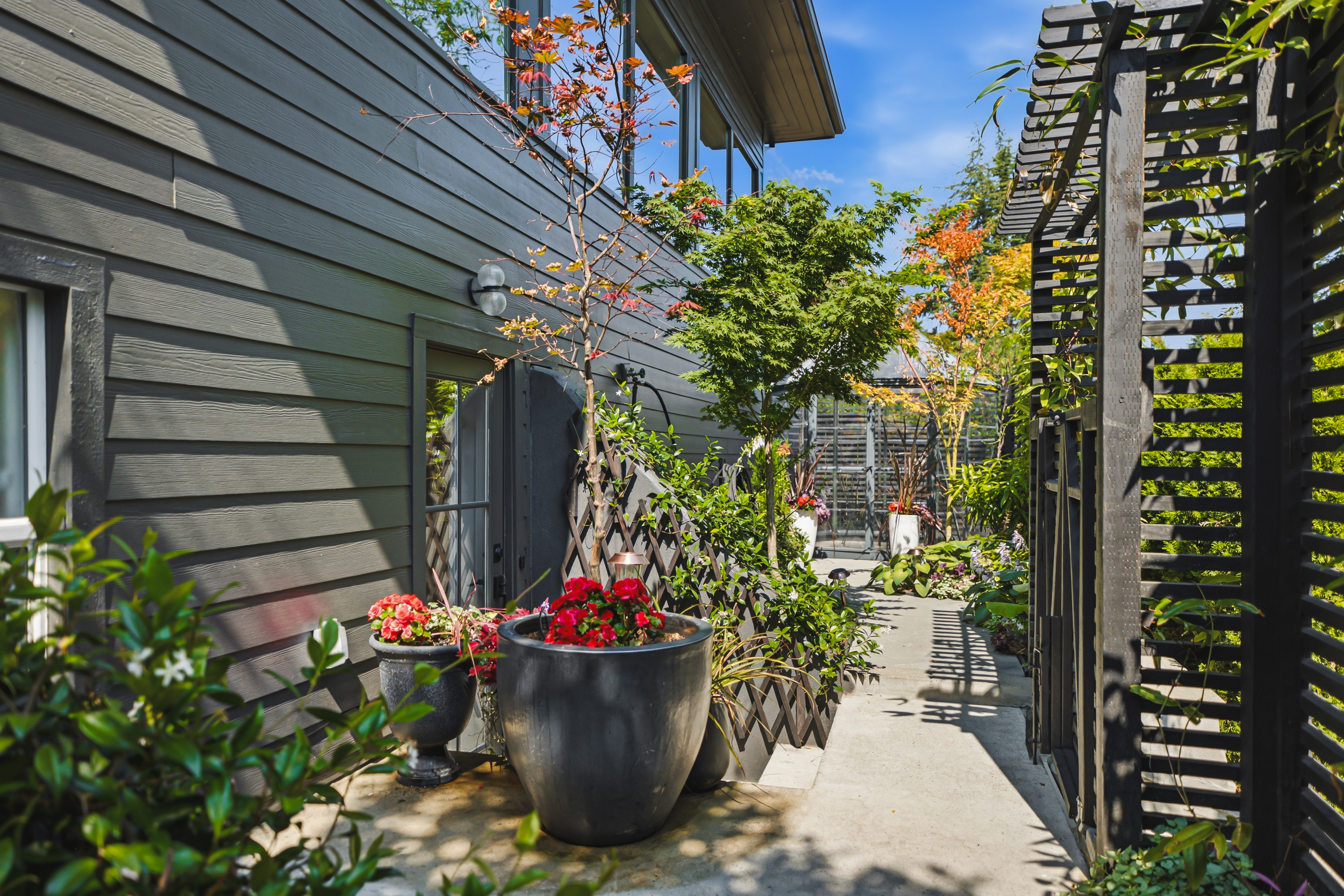
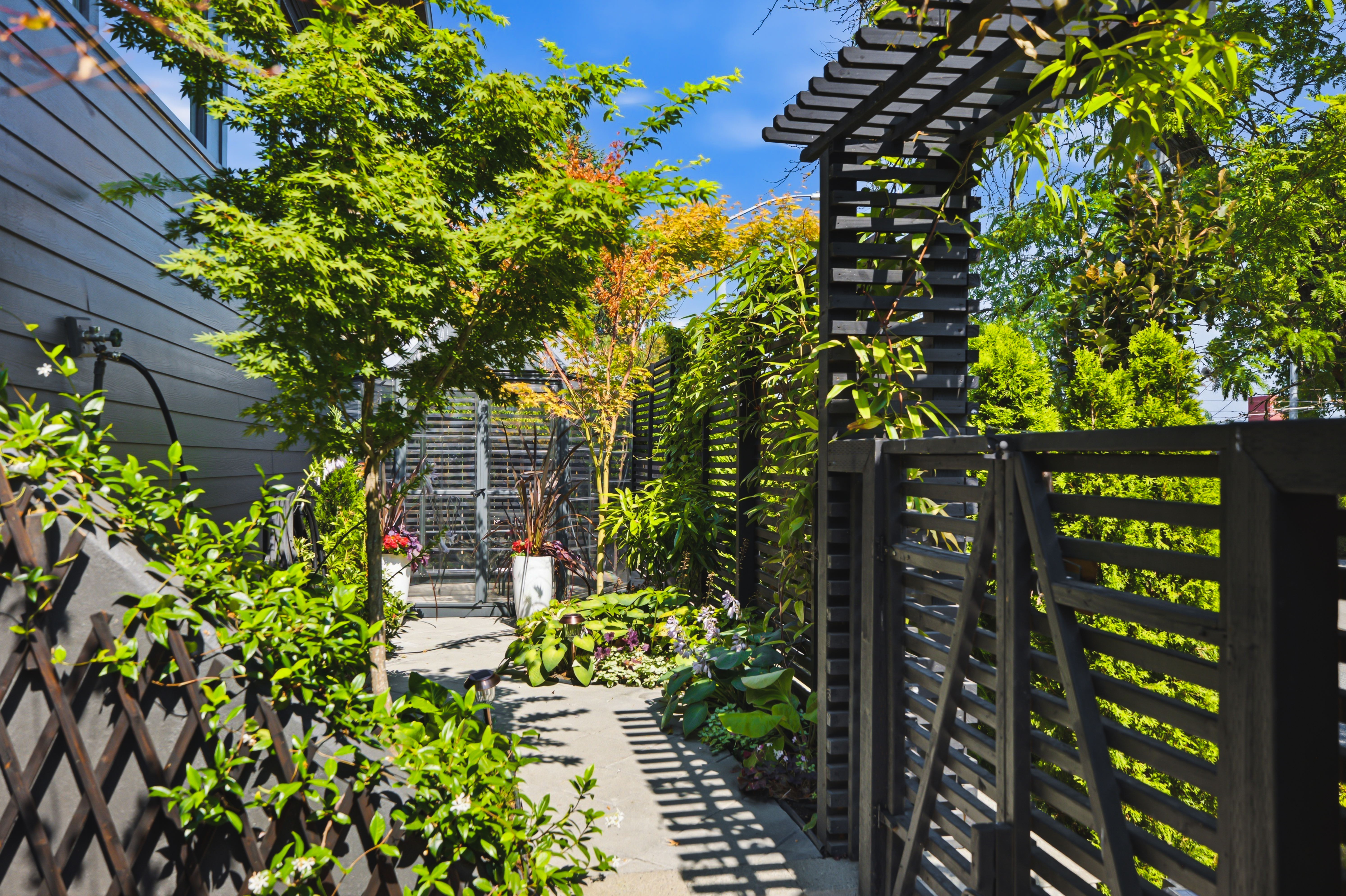
Japanese maples do most of the work here, one gold and one that turns coral, set against the black screens. Underneath them, bergenia and broad leaved shade planting, pots by the door, and the climbers running up the lattice.
The greenhouse end
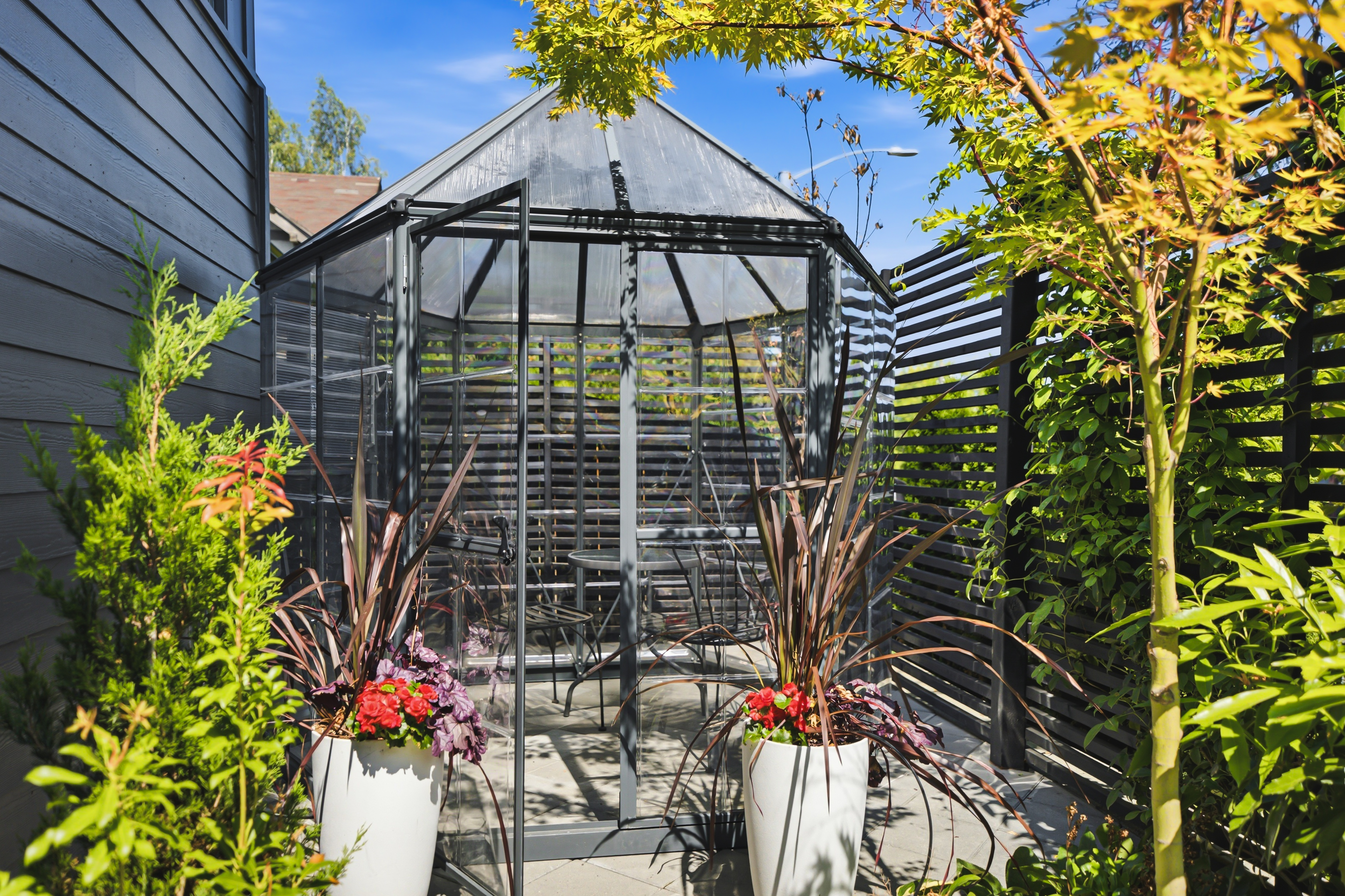
New Zealand flax in near black, the strappy burgundy foliage in the planters, and pieris, which pushes out red new growth in early spring. The gold maple leans over the glass.
The terraces
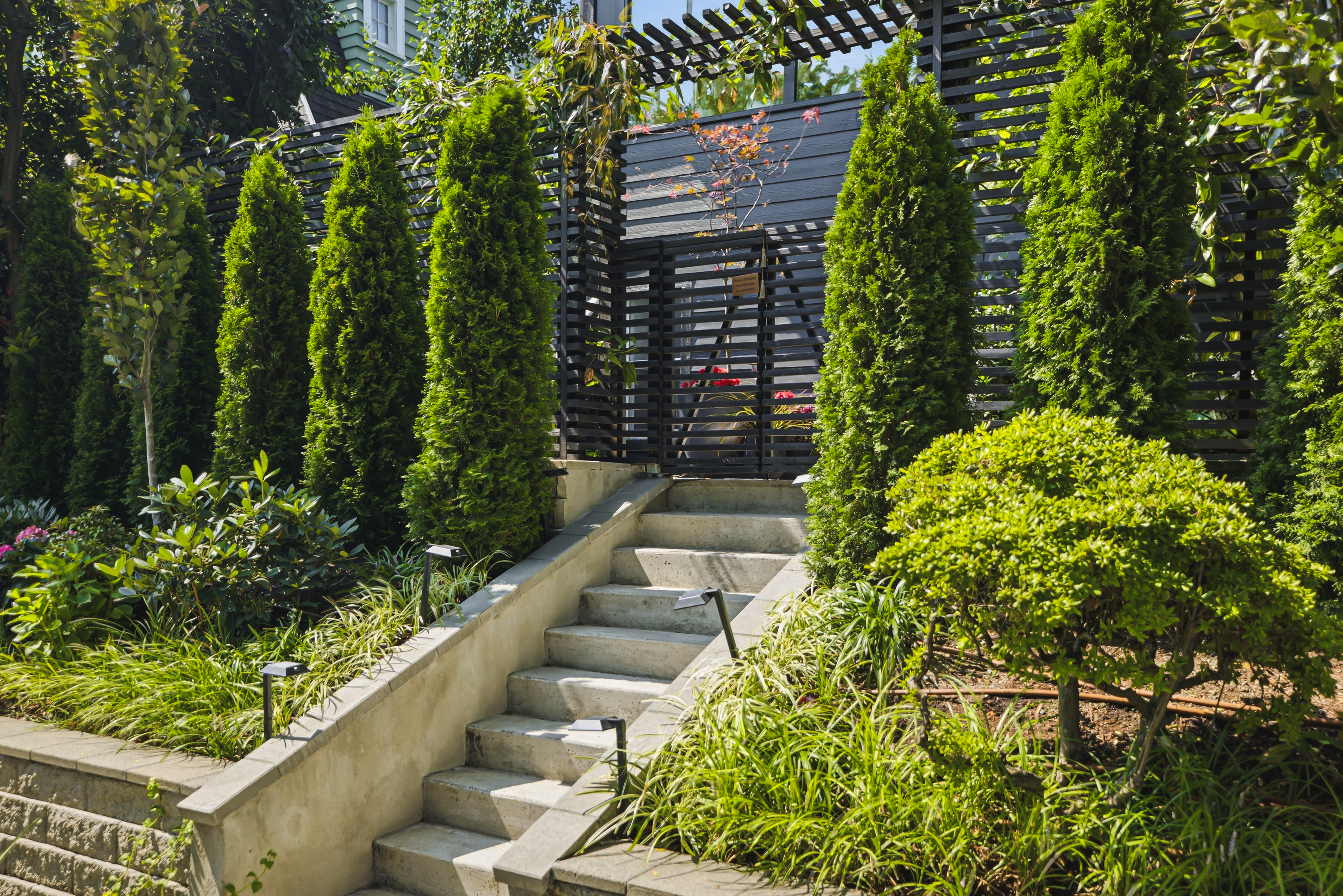
A row of emerald green arborvitae holds the upper boundary, with clipped evergreen mounds and a bank of mondo grass below it. This is the part that looks much the same in February as it does in July.
At the door
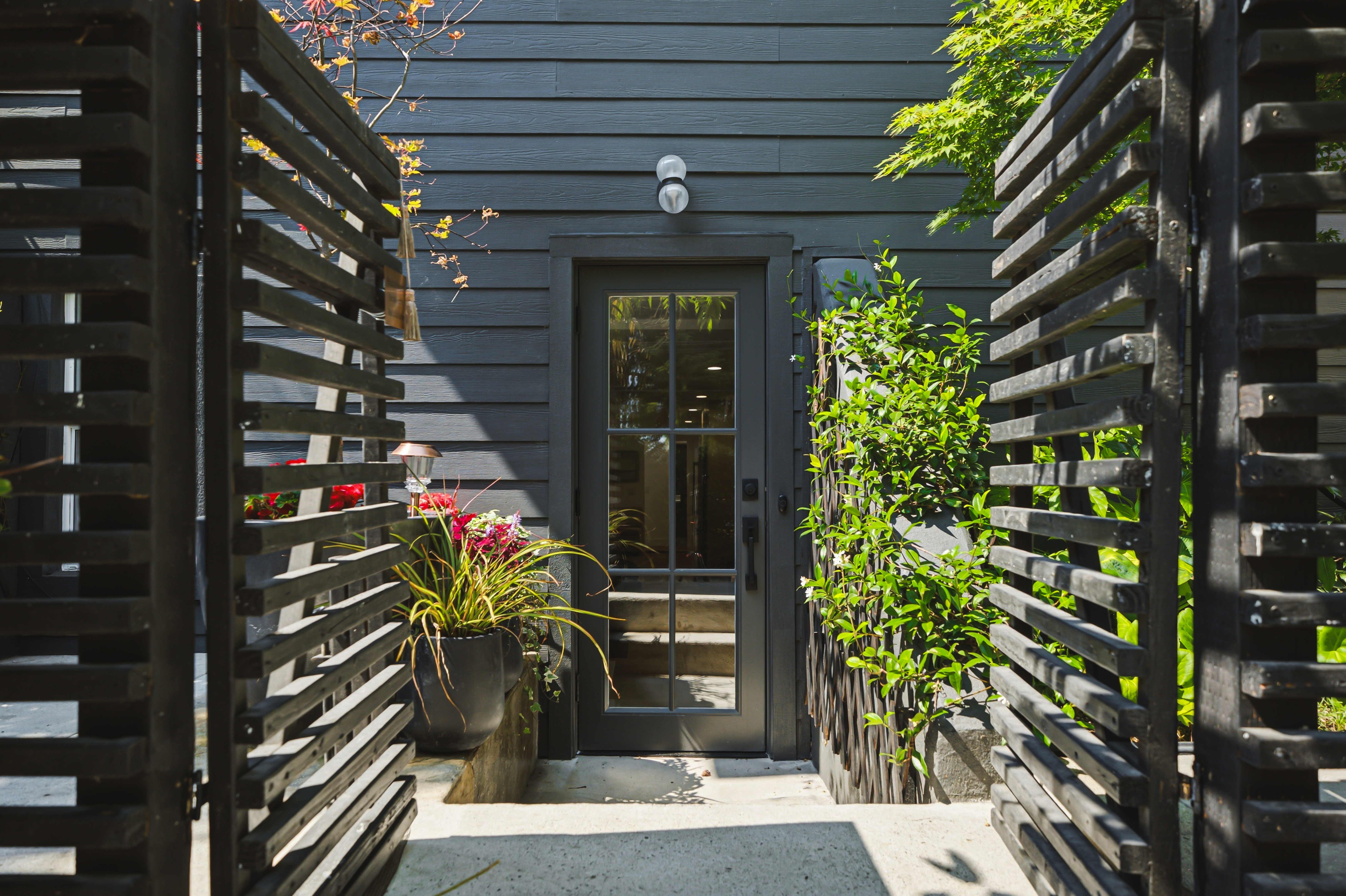
A bronze sedge in the planter by the entrance, which catches the light late in the afternoon, and star jasmine trained up the screen beside it.
Through the kitchen window
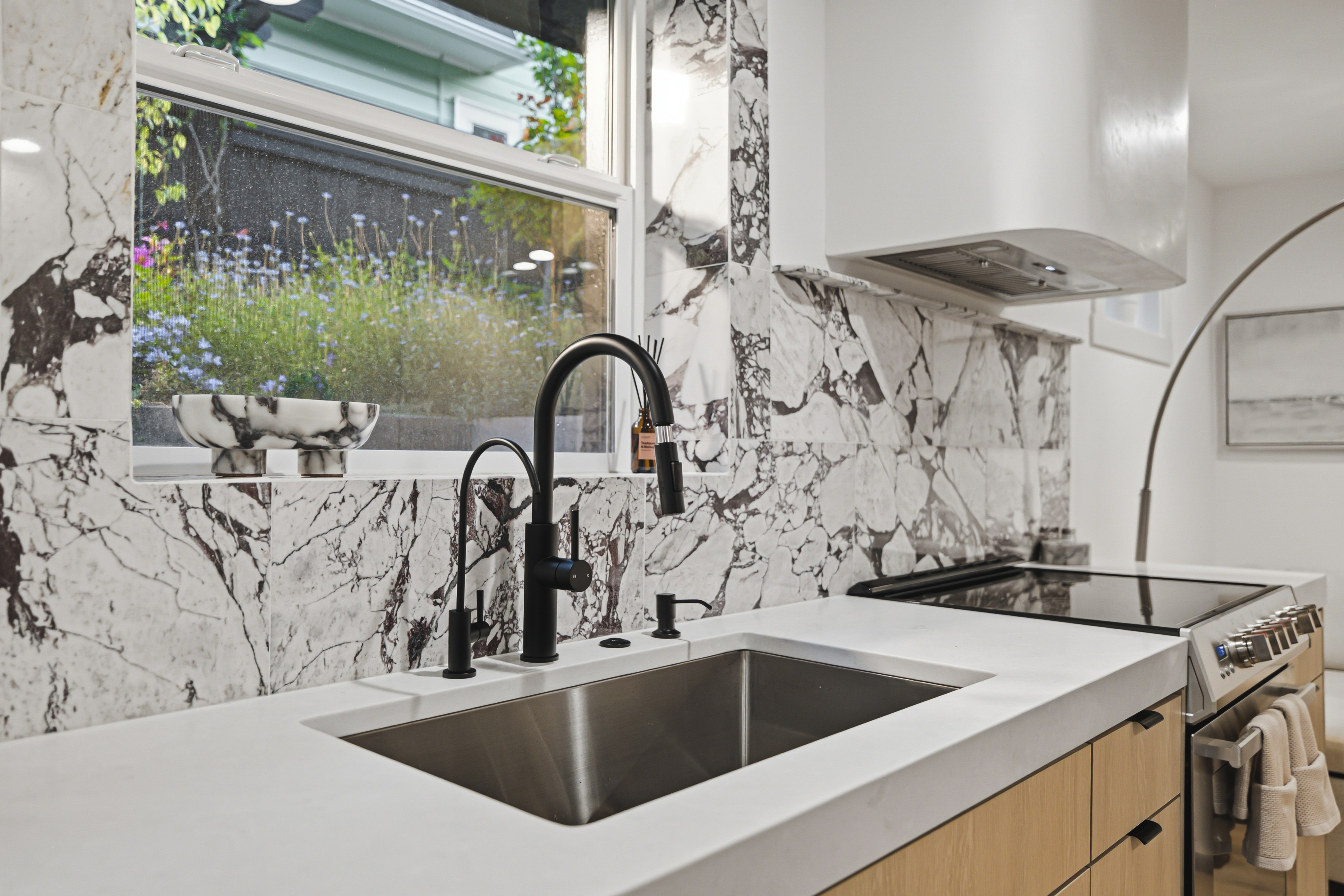
Lavender, planted at eye level from the sink, and in flower for most of the summer.
There is a great deal more than this in the beds. The full list is on every plant.
A number of these are toxic to cats and dogs, the pieris and the rhododendron seriously so, and the courtyard is open. That is the reason for the no pets rule.
The garden and the entrances · The greenhouse · How things work

